The BETTER Lab
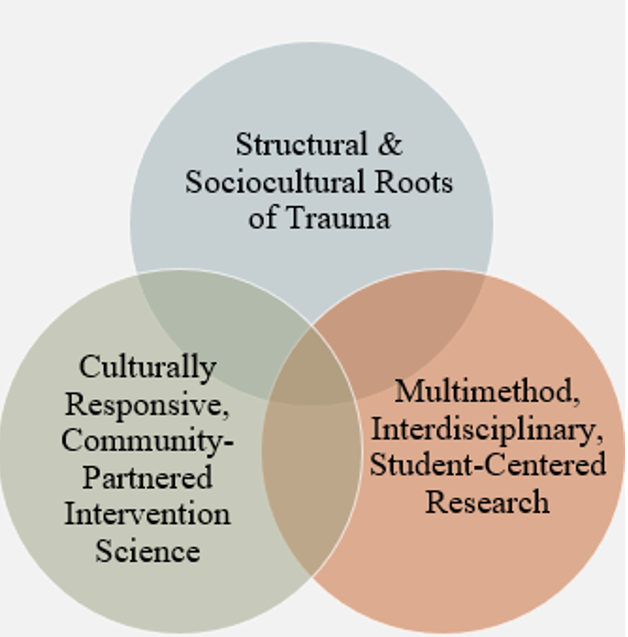
The BETTER Lab is the research arm of The BETTER Collaborative. The lab is led by Dr. Nuha Alshabani and is supported by undergraduate, graduate, and medical student research assistants. We collaborate closely with clinicians, educators, and researchers committed to advancing health equity for marginalized communities.
Current Projects
Collaborative Development of a Skills-Based Program for Resisting Oppression-Based Stress and Trauma
2024–2026 | PIs: Alshabani & LaMartine
Description: This study applies implementation science and participatory methods to expand the Reconnect intervention, initially focused on anti-Black racism, into adapted versions addressing additional experiences of marginalization for sexual and gender diverse communities, Latina/o/x communities, and African migrant communities. The goal is to develop a modular, intersectional intervention that allows clinicians to tailor treatment modules across diverse identities and experiences.
Funded by: Boston Medical Center Health Equity Accelerator
Review of Médecins Sans Frontière (MSF)’s Mental Health and Psychosocial Support Services
2025–2026 | PIs: Alshabani & Aldhalimi
Description: This study conducts a comprehensive review of the Mental Health and Psychosocial Support (MHPSS) component of MSF’s Hebron Project, tracing its development and impact from 2018 to 2025. By identifying key lessons learned and best practices, the study aims to strengthen program quality, effectiveness, and sustainability. Findings will inform programmatic decision-making, contribute to institutional learning within, and support the adaptation and scale-up of evidence-based MHPSS strategies across humanitarian contexts.
Funded by: Médecins Sans Frontières
Past Projects
Racialized Harms of Family Separation: Needs Assessment to Inform Treatment and Policy
2024–2025 | PIs: Gellatly & Taknint; Co-I: Alshabani
Description: This mixed-methods study documents the lived experiences of migrant parents separated from their children. The project aims to:
a) elevate these narratives to motivate public awareness and political action to dismantle racist policies;
b) inform the development of culturally responsive mental health interventions addressing separation-related distress; and
c) guide policy reform priorities and advocacy strategies.
Funded by: Boston University Center for Antiracist Research
Vicarious Trauma, Compassion Fatigue, and Burnout in Hospital Interpreters
2023–2024 | PIs: Gellatly & Alshabani
Description: This study examined experiences of vicarious trauma, compassion fatigue, and burnout among hospital interpreters. Findings aim to inform the development of training programs and institutional systems of support to better meet interpreters’ professional and emotional needs.
Funded by: Boston University Center for Forced Displacement
Adaptation and Dissemination of a Race-Based Stress, Trauma, and Empowerment Program for Community Churches
2022–2024 | PIs: Alshabani, Valentine, & Cromartie
Description: Using intervention mapping and participatory research methods, this project co-designed Reconnect, a group-based therapy intervention addressing the physical and psychological effects of anti-Black racism. The intervention was piloted in both hospital and community-based settings
Funded by: Blue Cross Blue Shield of Massachusetts Foundation
Current Lab Members
Aysha Khan is a doctoral student in the Counseling Psychology program at the University at Albany. She received her B.A. In Clinical Psychology from Macaulay Honors College at CUNY Hunter in 2024. She also is a clinical research coordinator at the Center for Stress, Resilience, and Personal Growth at the Icahn School of Medicine at Mount Sinai, where she studies trauma and resilience in the healthcare worker population. Aysha’s research interests include social determinants of mental health and how individuals from marginalized communities remain resilient through adversity. Specifically, she hopes to examine the impact of culture and community cohesiveness on the mental health of immigrant and refugee populations.
LJ Huang is a licensed school counselor with an M.Ed. in school counseling and an M.A. in psychological counseling from Teachers College, Columbia University. LJ is currently a doctoral student in Counseling Psychology at the University at Albany. His research primarily focuses on multilevel stigma and interventions, intersectionality, power structures, and minority population health. He is the Lab Director for the BETTER Lab, mentoring students across the academic pipleine.

Maycen Schaefer is a master's student in Mental Health counseling at the University at Albany. She received her bachelor's in psychology from the University at Albany in 2026. With prior experience in behavioral neuroscience research, she is interested in expanding her research experience through the BETTER Lab. Her interests include addressing health inequities and improving support and access to care for underserved communities.
Aaruba Ayesha is a first-year Clinical Psychology doctoral student at the University of Utah. She is a trauma therapist who specializes in treating refugees, asylum seekers, and survivors of torture. She completed an MA in Mental Health Counseling & Behavioral Medicine at Boston University.
Lab Alumni
Katy Price, Lab Director
Katy received her Psychology B. A. from the University of Massachusetts Boston in 2020. She was the Senior Research Assistant at both the Immigrant and Refugee Health Center (IRHC) and the Boston Center for Refugee Health and Human Rights (BCRHHR). Katy’s research interests are centered around intergenerational trauma and resilience. She is particularly interested in examining trauma and substance use within marginalized communities who have experienced sexual and gender-based violence. She is pursuing a doctoral degree in Clinical Psychology at the University of Rhode Island.
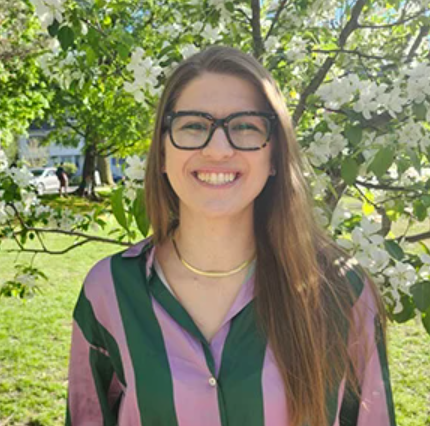
Andrew Lenart
As a Research Assistant for the BETTER Lab, Andrew supported the Racialized Harms of Family Separation Needs Assessment study. Andrew graduated from Wake Forest University in 2022 with a degree in Anthropology and completed his MPH at Boston University School of Public Health in 2024. Blending qualitative and quantitative research skill sets, he joined the lab as a founding member in 2023. His research interests include patient-centered, culturally sensitive care, and improving healthcare access for marginalized communities.
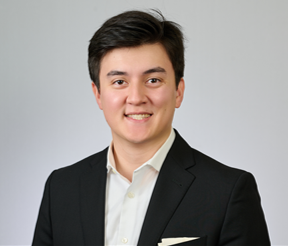
Chloe Mak
Chloe Mak graduated from Northeastern University, majoring in Psychology with a minor in Behavioral Neuroscience. Chloe completed a 6-month co-op at Boston Medical Center as a program assistant for the Addiction Psychiatry Treatment Program, and then worked as a research assistant for the BETTER Lab. She also has previous experience working as a Health Equity intern at Northeastern University, researching Adverse Childhood Experiences (ACEs) as well as the impact of trauma on health. Chloe is particularly interested in research focused on not only enhancing our understanding of trauma and fostering resilience but also developing improvements to equitable and accessible mental health resources and services.
Iman Ibrahim
Iman Ibrahim graduated from Northeastern University, with a major in Public Health and minor in Data Science. Iman completed a co-op at Boston Medical Center as a health equity research assistant with the RESTORE Center. Previously, she has been a health equity intern at Northeastern University, where she conducted research on social determinants of mental health and explored applications of natural language processing in public health. Iman is passionate about advancing health equity, with a particular focus on immigrant and refugee health, as well as leveraging digital health innovations to address disparities in care.
Selected Publications
Price, K., Lenart, A., Taknint, J., Gellatly, R., & Alshabani, N. (2026). Addressing barriers to forcibly displaced migrant’ participation in research. Journal of Immigrant and Minority Health.
Alshabani, N., Godfrey, L., Fuchs, C., Villa, R., Perez, D., & Valentine, S. E. (2025). Assessing Implementation and Health Equity Determinants to Develop a Facilitation Plan for Varied Intensity Posttraumatic Stress Disorder (PTSD) Treatments in Minority-Serving Institutions. Psychological Services, 22(3), 546–558. https://doi.org/10.1037/ser0000941
Alshabani, N., Godfrey, L. B., Taknint, J. T., Sahib, W., Atari-Khan, R., & Price, K. (2025). Intergenerational Resilience in the Context of Historical and Ongoing Trauma. Translational Issues in Psychological Science, 11(2), 206–222. https://doi.org/10.1037/tps0000446
Alshabani, N., Haws, J. K., Zlotnick, C., & Johnson, D. M. (2025). PTSD Symptom Networks During Treatment Among Residents in Domestic Violence Shelters. Journal of Counseling Psychology, 72(1), 1–14. https://doi.org/10.1037/cou0000771
Ahmad, S. S., Hammad, I., Rbeiz, K., Ebrahimi, C. T., Alshabani, N., McLaughlin, M. Gonzalez, A., Haws, J. K., Alshabani, N., Zlotnick, C., & Johnson, D. M. (2025). Cyber Abuse and Posttraumatic Stress Disorder Among Racially Diverse Women Who Have Resided in Domestic Violence Shelters: A Longitudinal Approach. Psychological Trauma, 17(S1), S105–S114. https://doi.org/10.1037/tra0001868
Ahmad, S. S., Hammad, I., Rbeiz, K., Ebrahimi, C. T., Alshabani, N., McLaughlin, M. M., Kia-Keating, M. & Weisman de Mamani, A. (2025). Exploring cumulative identity-based discrimination, distress, and traumatic exposure among Muslims living in the United States. Psychological Trauma: Theory, Research, Practice, and Policy, 17(6), 1202.(2025). Exploring Cumulative Identity-Based Discrimination, Distress, and Traumatic Exposure Among Muslims Living in the United States. Psychological Trauma, 17(6), 1202–1211. https://doi.org/10.1037/tra0001764
Taknint, J. T., Thomas, F. C., Gellatly, R., & Ameresekere, M. (2024). Responding to trauma: A critical review of mental health and psychosocial interventions for refugee women. Current Psychiatry Reports, 26(12), 866–876. https://doi.org/10.1007/s11920-024-01568-3
Taknint, J. T., Marzoughi, M., Gellatly, R., Krengel, M. H., & Kimball, S. L. (2024). Improving access to disability assessment for US citizenship applicants in primary care: An embedded neuropsychological assessment innovation. Annals of Family Medicine, 22(5), 458.
Gellatly, R., Boustani, M., Nair, P., Mahajan, R., Jambhale, A., Sahu, R., Chodankar, B., Krishnan, M., Malik, K., Mathur, S., Becker, K., Michelson, D., Patel, V., & Chorpita, B.F. (2024). Adolescent engagement in a stepped care, transdiagnostic mental health intervention delivered in Indian schools. Discover Psychology, 4(43). https://doi.org/10.1007/s44202-024-00154-1
Valentine, S. E., Alshabani, N., Godfrey, L. B., Paul, E., Clark, C., Giovannini, K., & Nillni, Y. I. (2023). Considerations for the provision of PTSD treatment among pregnant women with substance use histories: A clinical conceptual model based on case consultation field notes. General Hospital Psychiatry, 84, 3–11. https://doi.org/10.1016/j.genhosppsych.2023.05.013
Alshabani, N., Speight, S. L., Soto, S. I., Koskey, K. L. K., & Behrman, C. (2023). Socioecological Perspectives of Resilience Among Arab and Middle Eastern Migrants. The Counseling Psychologist, 51(8), 1096–1127. https://doi.org/10.1177/00110000231189299
Valentine, S. E., Godfrey, L. B., Gellatly, R., Paul, E., Clark, C., Giovannini, K., ... & Nillni, Y. I. (2023). Supporting the implementation of written exposure therapy for posttraumatic stress disorder in an obstetrics-substance use disorder clinic in the Northeastern United States. SSM-Mental Health, 4, 100256.
Musindo, O., Jafry, S., Nyamiobo, J., Becker, K.D., Gellatly, R., Maloy, C., Lozano, A., Romero, B., Kola, L., Chorpita, B.F., Kumar, M. (2023). Mental health and psychosocial interventions integrating sexual and reproductive rights and health, and HIV care and prevention for adolescents and young people (10-24 years) in Sub-Saharan Africa (SSA): A systematic scoping review. eClinicalMedicine, 57, 1-27.https://doi.org/10.1016/j.eclinm.2023.101835
Becker, K.D., Guan, K., Malik, K., Gellatly, R., Nair, P., Patel, V., & Chorpita, B.F. (2023). Proof-of-concept evaluation of the Reaching Families engagement system for youth mental health workers in India. Journal of Health Science & Education, 6(4): 226. https://doi.org/10.0000/JHSE.1000226
Watson, M. K., Alshabani, N., & Swiatek, S. (2022). An Intersectional Approach to Problem Drinking in the Nepali/Bhutanese Community in Northeast Ohio. Human Organization, 81(1), 60–70. https://doi.org/10.17730/1938-3525-81.1.60
Gellatly, R., Boustani, M., Malik, K., Michelson, D., Nair, P., Patel, V., & Chorpita, B.F. (2022). A qualitative analysis of collaborative efforts to build a multi-problem, school-based intervention for common adolescent mental health difficulties in India. Frontiers in Psychiatry, 13, 1-17. https://doi.org/10.3389/fpsyt.2022.1038259
Mattar, S., Gellatly, R. (2022). Refugee mental health: Culturally relevant considerations. Current Opinion in Psychology, 47, 1-5. https://doi.org/10.1016/j.copsyc.2022.101429